The Library
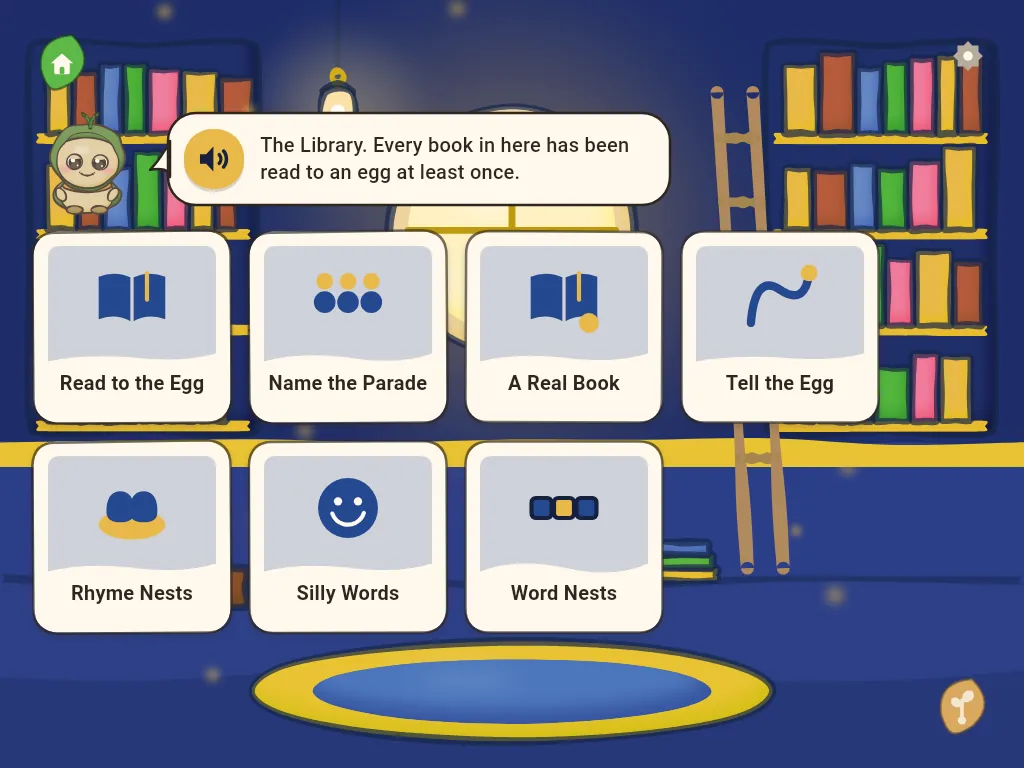
Reading and language
Rhymes, first sounds and silly words. Reading a real book together counts the most.
A gentle game for ages 3 to 8
Your child raises little creatures by reading, counting, drawing, exploring and being kind. What hatches depends on how they cared for it. Every day ends with something to do away from the screen.
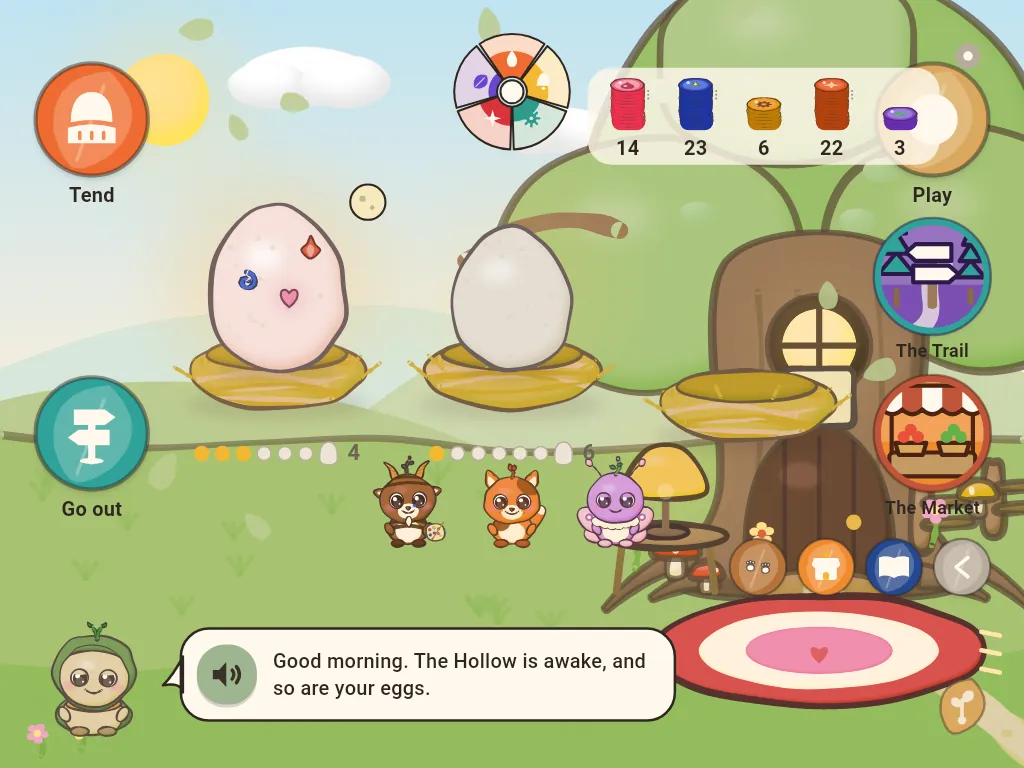
How a day goes
A day of play takes about 8–12 minutes for ages 3–5 and 15–20 minutes for ages 6–8. Then the Hollow goes to sleep until tomorrow.
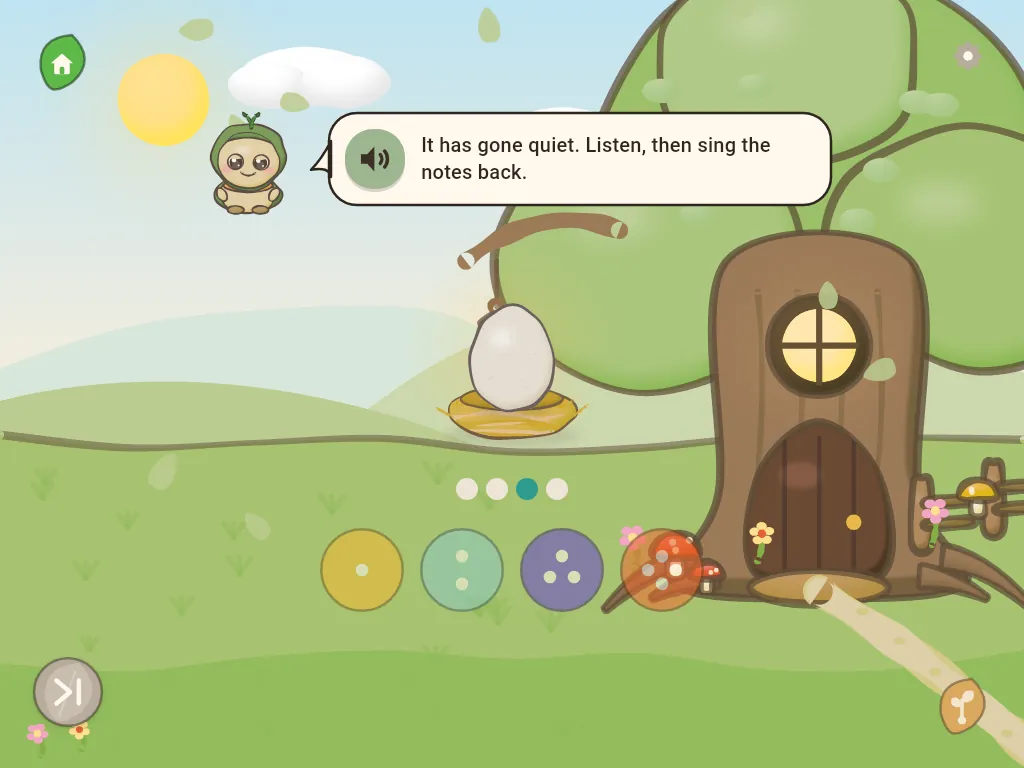
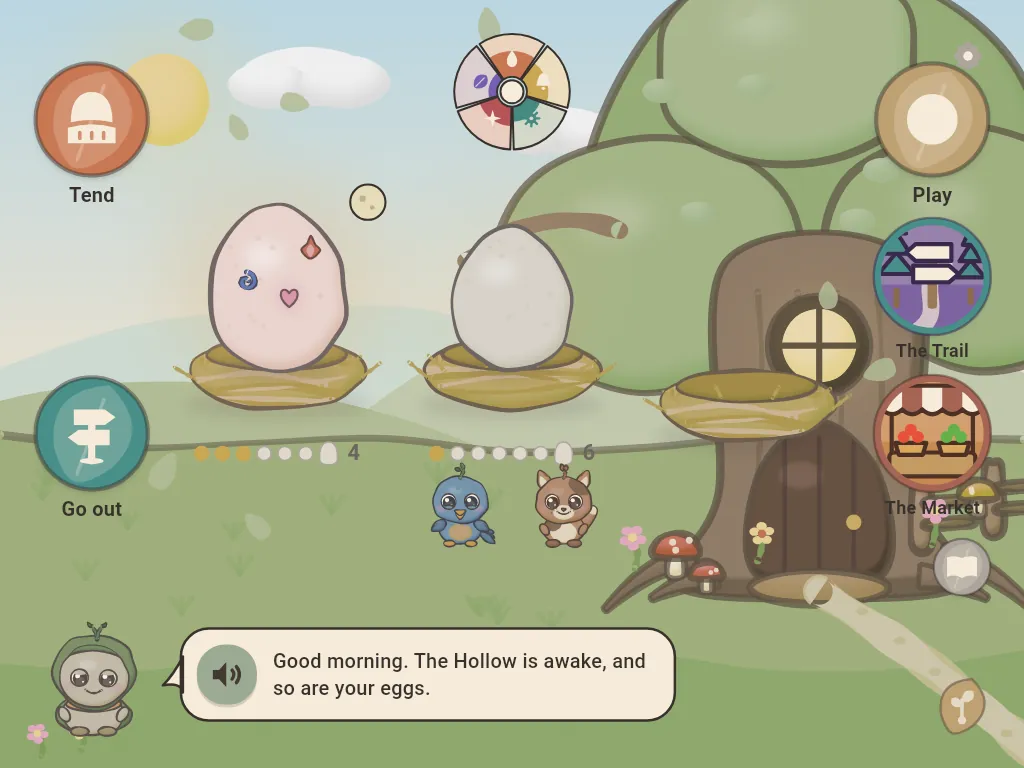
Each egg has one or two small needs. A blanket when it’s cool, a song when it’s dim, quiet company when it’s restless.
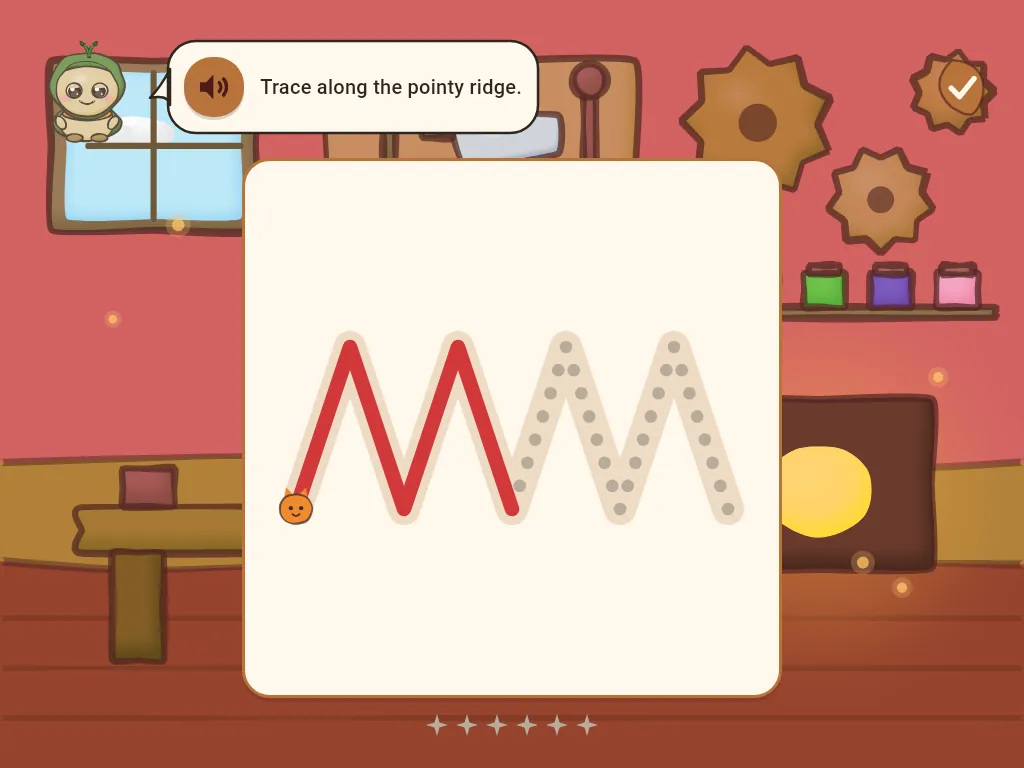
Your child picks where to go: read in the Library, trace in the Workshop, read faces in the Meadow. The guide never pushes.
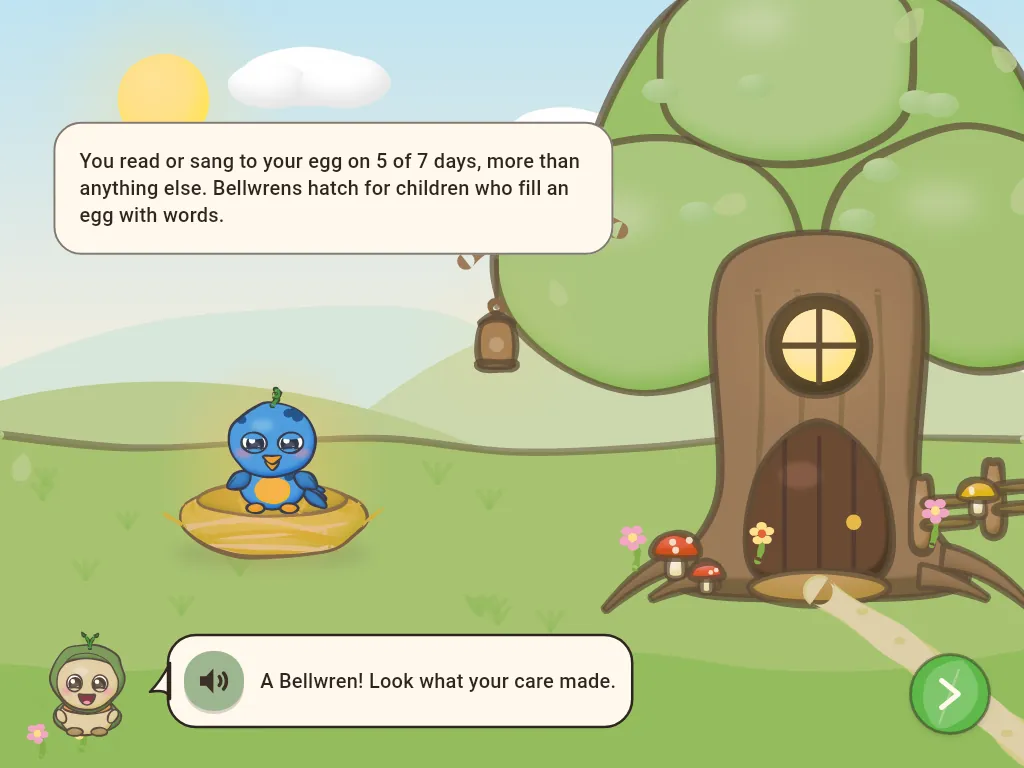
The egg changes a little every day. When it hatches, the game explains exactly what your child did to shape it.
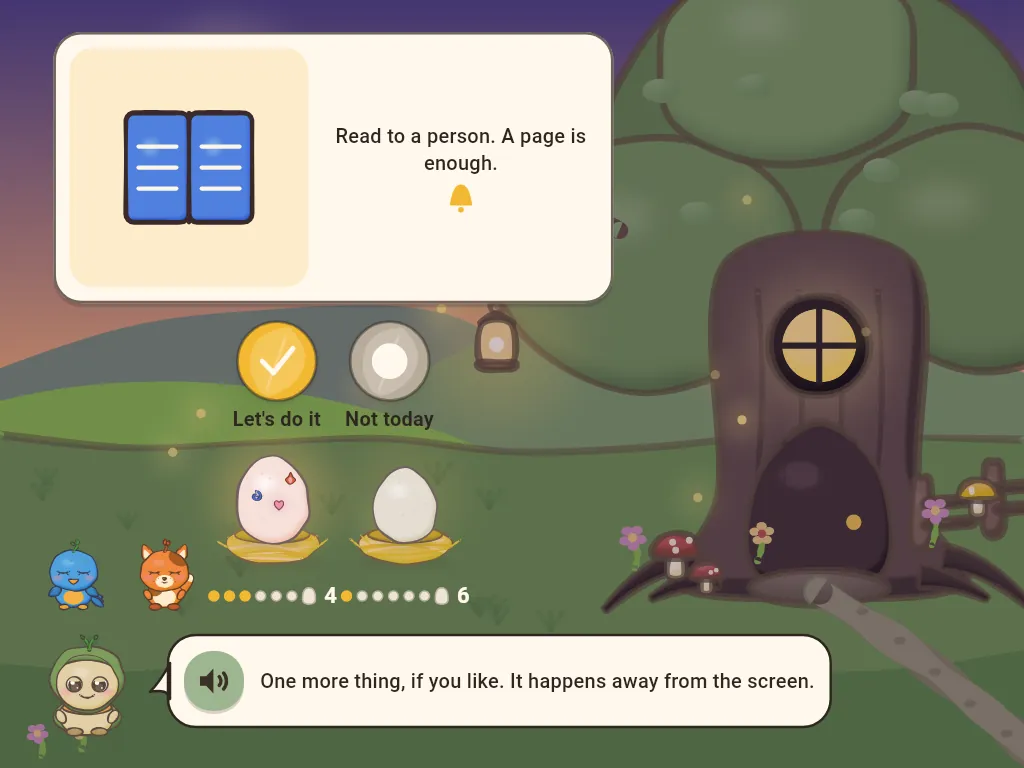
The Hollow falls asleep, and the guide suggests one thing to do off screen, like reading a page to someone.
Places to explore
Activities adjust to your child’s age and pace, so a three-year-old and a seven-year-old each find the right challenge.
Reading and language
Rhymes, first sounds and silly words. Reading a real book together counts the most.
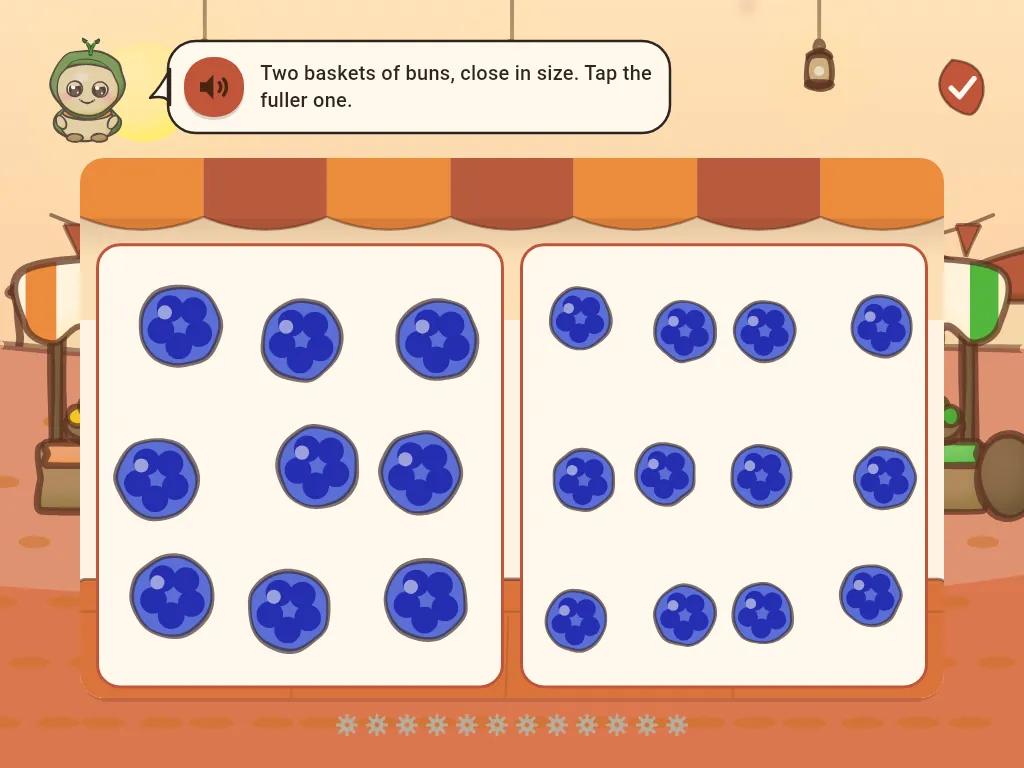
Counting and number sense
Which pile is bigger? Count out four for the shopkeeper. Weigh, measure and make change.
Drawing and building
Trace paths, copy shapes and put things together, step by step and with both hands.
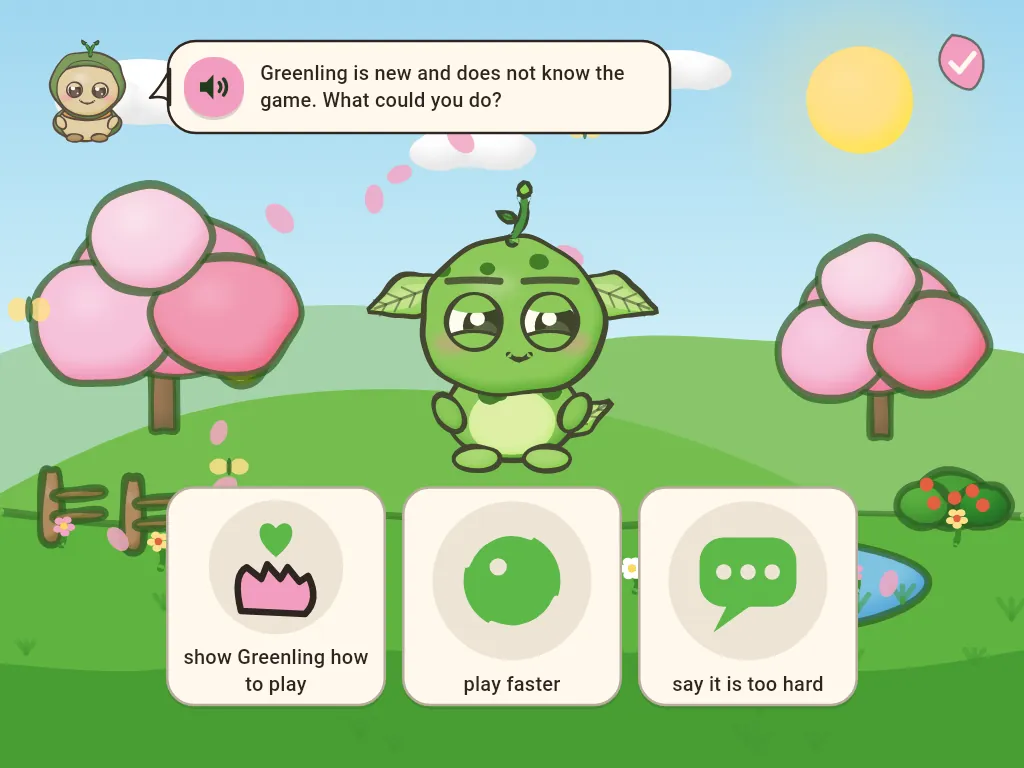
Feelings and friendship
Read faces, take turns, and figure out how to make things right after a mix-up.
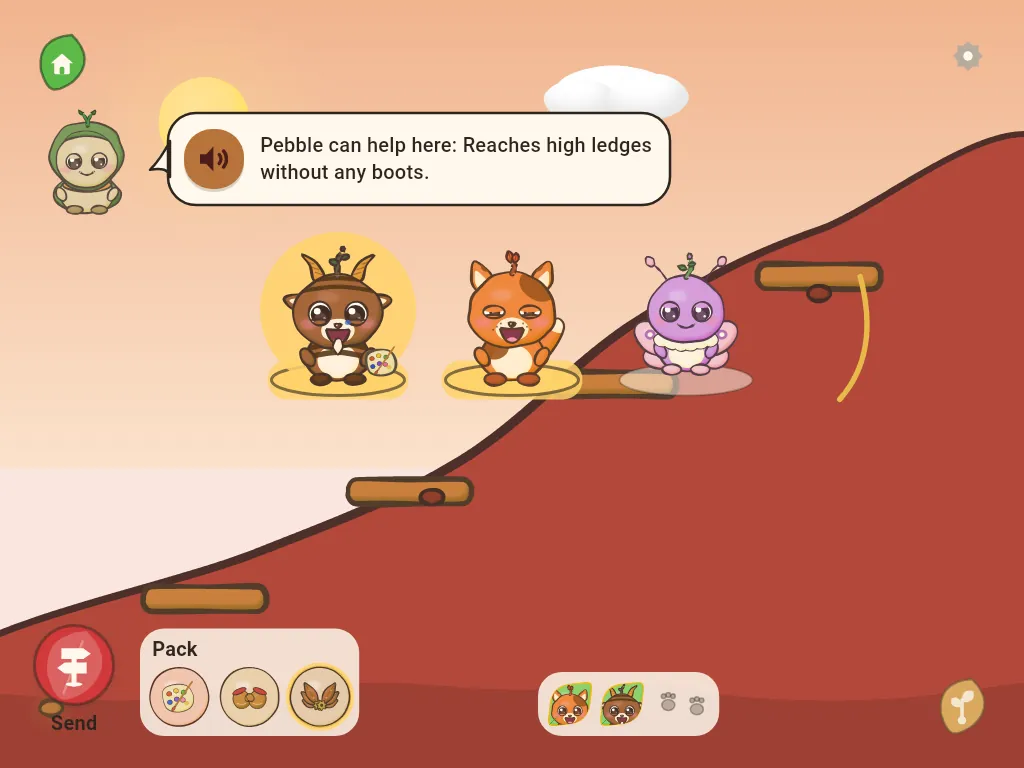
Exploring and adapting
Short trips where the path changes. Pack wisely, try a new way, and keep going.
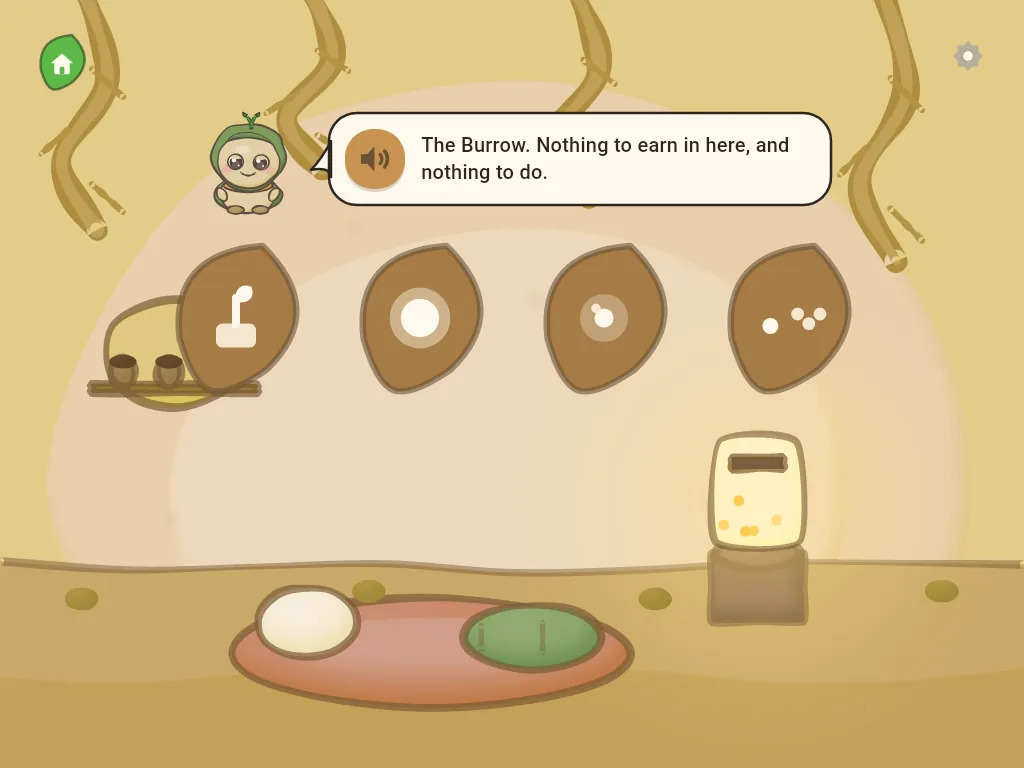
Calm and patience
A quiet space with no goals, open from anywhere. Watch a seed grow, breathe, and come back when ready.
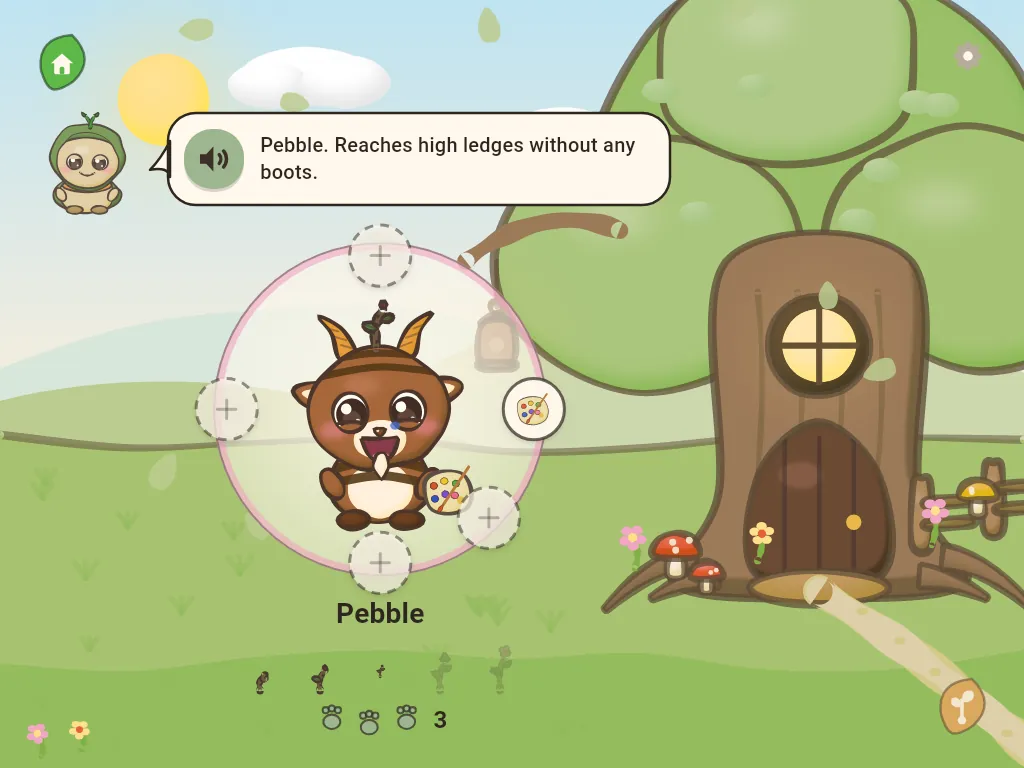
Every creature is earned
“You read or sang to your egg on 5 of 7 days, more than anything else.”
Made for families
When the day’s play is done, the Hollow sleeps. Extra time earns nothing extra.
Reading a real book, hopping five times or finding a triangle at home all help an egg grow.
No in-app purchases, no ads, no tracking, no chat and no leaderboards.
Settings, reports and any link out of the app sit behind a parent PIN.
Everything works without a connection. Progress backs up when you’re online again.
Export or delete your child’s data any time. Camera and microphone stay off unless you turn them on.
Turn on Calm Palette for softer colors, reduce motion, or set a volume ceiling. Nothing ever flashes or shakes. Every screen a child uses works without reading.
For grown-ups
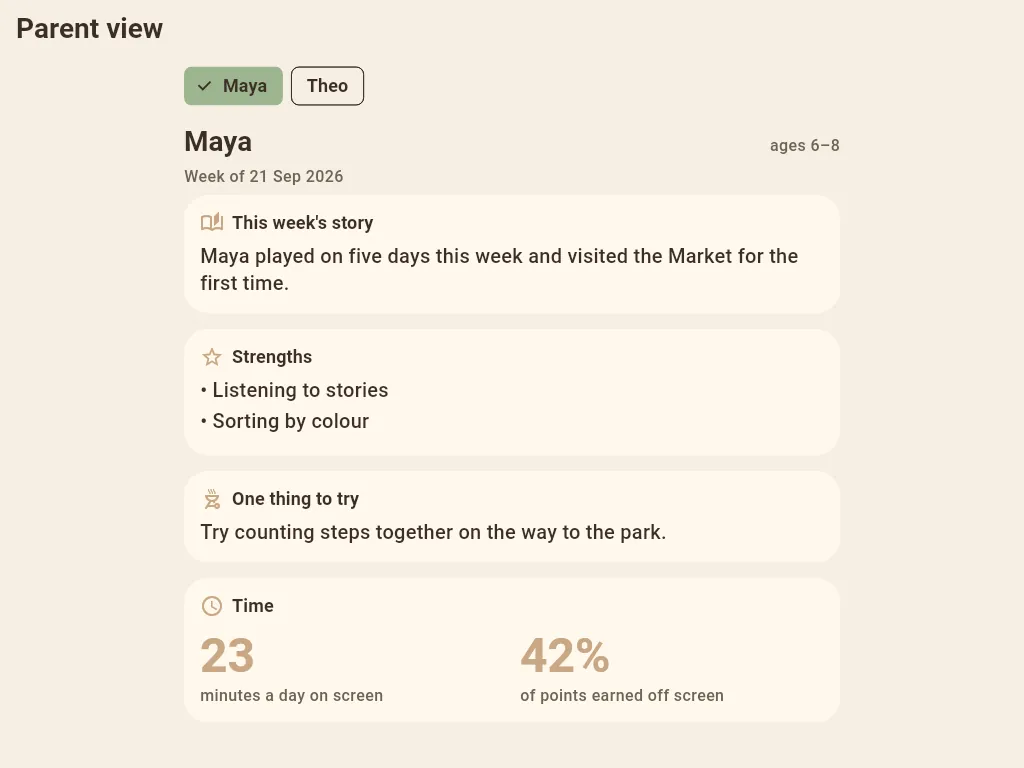
It’s a game, not a test. It never scores, grades or compares your child. Behind the parent PIN, you’ll find:
If a skill stays harder for a while, you’ll get a plain-language note and a one-page summary you can bring to your pediatrician, if you choose. You decide what is shared and with whom.
Questions
No. It’s a learning game. Your child is never quizzed or scored. Behind the scenes, the app notices how play is going so it can pick the right activities and share strengths and ideas with you. It doesn’t diagnose anything, and it isn’t a medical device.
Ages 3 to 8. Younger children get bigger buttons, shorter days and simpler activities. Older children get longer quests, more places and more choices.
We’re starting on iPad with families in the United States. iPhone and Android tablets will follow.
No. Every activity works with them off. If you turn them on, they’re used only during activities that need them, like saying a silly word out loud or copying a face. You can switch them off or delete recordings at any time.
About 8–12 minutes a day for younger children and 15–20 for older ones, with a clear stopping point. Playing longer doesn’t earn more.
Levian Health, a small team that started with one family’s long wait for answers. The app is built in collaboration with researchers at Stanford. Read our story.
Early access
The app is built and in early testing. We’re inviting U.S. families with an iPad to try it first and tell us what they think.